Wildlife Protection Needs More Than Law Enforcement – A New Approach Has Come

Across the landscapes surrounding the Luangwa Valley and Kafue National Park, a quiet but powerful transformation is underway, one that is redefining wildlife conservation in Zambia, and perhaps beyond.

For decades, anti-poaching strategies have relied on costly law enforcement that involves scout patrols, related operational costs, arrests, and court cases. There is a different path, rooted in opportunity rather than punishment, one that Community Markets for Conservation (COMACO) has taken

It is called the illegal hunter transformation training.  In partnership with Zambia’s Department of National Parks and Wildlife (DNPW), local chiefs, and farmer cooperatives COMACO has supported the transition of 2,380 former illegal hunters into conservation-aligned livelihoods with skills that offer a better future than a life of poaching. Entry into the program requires poachers to surrender their firearms and exit illegal hunting entirely. To date, more than 2,883 guns have been voluntarily handed over and no longer used for poaching. The scale of this impact has silenced the once familiar sound of distant gun fire.  Wildlife numbers are now recovering.

Supporting this transformation process is the newly established training center built specifically for this program. It is located just outside Kafue National Park and hosts a structured six-week transformation course that combines mindset change with practical skills in goat, pig, and poultry husbandry, beekeeping, small-scale irrigation, carpentry, blacksmithing and other income generating trades.  By the end of the six weeks, participants graduate with a new, viable pathway of their choosing, based on the skills they learned and the opportunities when they return home.

Beyond livelihood training, an additional skill called chili blasting is taught, which is an innovative, low-cost deterrent that safely drives elephants away from crop fields that might otherwise have been destroyed. Employing these skills by reformed poachers not only safeguard harvests but also reinforce local willingness of living alongside wildlife.

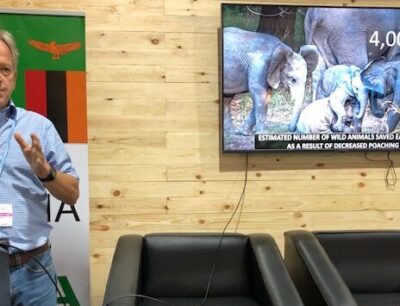
The economics of poacher transformation is compelling. Under COMACO’s model, it costs approximately $478 to transform a single poacher, significantly less than conventional anti-poaching costs, which typically exceed $4000 per illegal hunter arrested. Beyond cost savings, the long-term impact is far greater as opportunities for human-wildlife coexistence improves and the actual value of wildlife saved is realized.

These results defy long-standing beliefs that law enforcement is the best and only way to stop poaching. Remove the need to poach that comes from poverty and hunger, then much of the problem goes away.  To be clear, law enforcement remains a necessary deterrent to make alternative livelihoods more attractive.  If both strategies are implemented together, more nature-based economies can grow as the high cost of low enforcement can shift to habitat protection and wildlife reintroduction.

The poacher transformation results are reshaping the wildlife conservation strategy in Zambia and building unanimity for conservation among communities that share their borders with national parks: treating illegal hunters not as criminals deserving to be locked away, but potential allies in pursuit of wildlife coexistence.

Rebecca Snyder

Similar Posts

COMACO COMMENDS GOVERNMENT’S CONFERENCE OF PARTIES (COP27) APPROACH

  Lusaka, Zambia/Africa – The Community Markets for Conservation (COMACO) has commended government for rallying t


COMACO AT COP27 – Farmers, Carbon Markets, and A Model Scaling for Climate Solutions

In a few days, #COP27 in Egypt will bring Heads of State and thousands of people together to decide the future of #Clima

COMACO Delivers Multimillion Dollar Carbon Credit Transfer/Project to Nine Chiefdoms in Zambia

Lusaka, Zambia/Africa – The Community Markets for Conservation (COMACO) is enabling a multimillion-dollar carbon c